Inside: Three powerful strategies that show students exactly how to practice effectively right during their lessons! This blog post includes the “Practice Detective” method for finding problem spots, step-by-step techniques for building solid practicing foundations, plus creative ideas for self-evaluation. You’ll discover how to bridge the gap between what students think practice is and what actually leads to improvement, plus fun ways to make slow practice engaging with studio mascots and collaborative investigations. Your students will finally understand how to practice at home because you’ve shown them exactly what effective practice looks and sounds like!
Table of Contents
After spending years teaching a wide range of ages and levels of piano students at the university level and in my own studio and diving deep into research on effective practicing, I’ve learned some amazing approaches to teach piano practice that really work.
I’m excited to share these powerful strategies that will energize and encourage you and as you continue to explore effective ways to teach piano practice skills in your studio!
Why Students Struggle with Piano Practice
You know that moment in lessons when you ask, “Did you practice this week?” and your student enthusiastically nods yes?
But then their performance shows us that what they think of as practice isn’t quite what we hope for as teachers. This disconnect is incredibly common (Barry & Hallam, 2002).
Here are some ideas for bridging the gap between what students think practice is and what actually leads to improvement.
Teach Piano Practice Easily: Practice During Lessons!
One of the most valuable things I’ve learned is that we can’t just tell students how to practice – we need to show them.
Here are 3 of my favorite tips for how to teach piano practice and establish solid practice habits right in the lesson:
1. Teach Piano Practice with The “Practice Detective” Method
- Start by choosing a small section of their music that needs work.
- I love using what Byo (2004) calls the “work place” – that spot where the student hesitates, stops, or it just doesn’t sound quite right.
- Instead of just pointing out the problem, make it a collaborative investigation, and ask leading questions to help students figure out what they need to do.
- For younger students:
- Time to be a practice detective!
- Did you notice anything in measure 12?
- What did you notice?
- Try it again, and use your musical detective skills to figure out exactly what’s happening and how to make it better.
- For older students:
- Time for work place practice!
- Did you notice anything in measure 12?
- What did you notice?
- Try it again, and listen closely to figure out exactly what’s happening and how to make it better.
- Then follow the steps below to practice together and help your students improve during their lesson.
2. Teach Piano Practice Step by step
- First, help your students find a tempo where they can play the very short section without mistakes.
- Have them locate this tempo on the metronome – this becomes their “starting point”.
- With my younger students, we have created a character named “Super Sloth”.
- Super Sloth is our go-to for our slo-o-o-o-o-o-owest tempos.
- I ask my students to play in “Super Sloth mode” when they’re practicing during their lessons.
- We even have a Super Sloth studio mascot!
- Next, have them set a specific goal for improvement.
- Then have them play the section twice (or 3 or 5 or 10 times) in a row at the slow tempo, correctly.
- This is very important – we’re building muscle memory, correct repetitions, and stronger connections in the brain, simultaneously.
- Now comes my favorite part – gradually add the expressive elements they might have forgotten while practicing so slowly.
- Add one element at a time, and have your student play it as well as they can.
- Continue adding expressive elements until they are all in place, and the section can be played beautifully, consistently.
3. Teach Piano Practice with Student Self-Evaluation
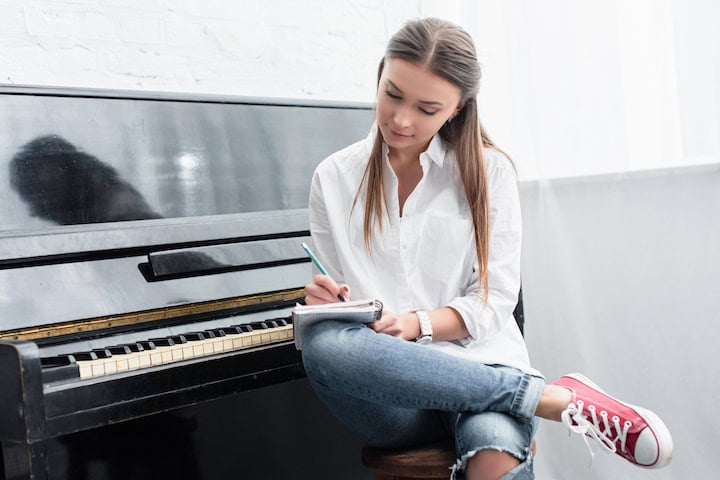
As we teach piano practice skills, one of the most valuable gifts we can give our students is the ability to self-assess and evaluate their own playing.
If we’re not teaching self-evaluation as we teach piano practice skills, we are missing out on a huge opportunity.
Byo (2004) suggests using what he calls “playing tests” during practice, but you could easily change the name to something more fun, like Playback Party or Sonata Soundcheck.
Here’s an easy way to implement this idea with your students.
Playback Party
- Have your student record a short section of their practice with their smartphone, or use yours if they don’t have one.
- Listen to the recording and guide them with specific questions.
- Did the tempo stay steady?
- Were the notes clear and even?
- Did the musical expression come through as you expected?
- Any other relevant questions appropriate for their age, skill level, and piece
- Help them create a specific practice plan based on their self-evaluation.
- If their tempo wasn’t steady, practice with the metronome, play duets, play with accompaniment tracks, etc.
- If the notes weren’t clear and even, show them an appropriate way to address this in their specific piece.
- If it wasn’t as musical as they expected, share these tips for playing more musically.
- Plus any additional things they heard while they were listening to their performance.
Next Steps in Teaching Piano Practice Skills
If your approach to teaching piano practice skills is in need of a quick refresh, start with these proven strategies that will gradually help your students learn to establish solid practice habits that will create better and more musical performances.
Implementing all of these strategies doesn’t have to happen all at once as you teach piano practice skills to your students.
Just start with one strategy and use it consistently across your entire studio. Then add another as students are ready.
I’d love to hear your experiences! How do you teach effective practice skills in your studio? What strategies have worked best with your students?
Frequently Asked Questions
Q: How much lesson time should I spend actually teaching practice techniques versus learning new music?
A: I typically spend about 15-20 minutes of a 30-minute lesson on practice techniques, especially in the first few months with a student. Think of it as an investment – once they learn how to practice effectively, they’ll progress much faster on new pieces! You can also weave teaching about practicing into new piece instruction by demonstrating these techniques as you introduce material.
Q: My student gets impatient with the “Super Sloth” slow practice. They want to play everything fast. How do I convince them?
A: I explain it like learning to ride a bike – you don’t start on a steep hill! I also use analogies they understand:”You learn to walk before you run.” Sometimes I challenge them: “Let’s see if you can play it perfectly 3 times in a row slowly, then we’ll try it faster.” But sometimes we play the hilarious “How FAST and how BADLY can you play this section?” game to show them that faster isn’t always better. But I admit that it’s very entertaining!
Q: What if my student can’t identify problems during the “Practice Detective” questioning? They just say “I don’t know” to everything.
A: Start with very specific, yes/no questions! Instead of “What did you notice?” try “Did you play all the right notes?” or “Was your left hand louder than your right hand?” Give them two clear options to choose from initially. As their listening skills develop, you can move to more open-ended detective questions.
Q: The recording and playback seems to make my students really self-conscious. How do I help them get comfortable with this?
A: Start by recording yourself first and listening together! Show them that even teachers hear things they want to improve. I also keep the recordings very short (just 4-8 measures) and focus on one specific element like “Let’s just listen for steady tempo.” Make it feel like a fun game rather than a test.
Q: How do I adapt these techniques for my adult students who feel silly with characters like “Super Sloth”?
A: Adult students love the concepts but need different language! Instead of “Super Sloth mode,” I say “Let’s find your best learning tempo” or “practice tempo.” The detective approach becomes “analytical listening” and the playback party becomes “objective assessment.” The techniques are the same – just the vocabulary changes.
Q: My student practices the same mistakes over and over at home. How do I break this cycle?
A: This is exactly why teaching practice techniques is so important! I have them demonstrate their home practice method during the lesson, then we problem-solve together. Often they’re practicing too fast or not stopping when mistakes happen, or not beginning with a specific goal. We practice the “stop and fix” method right in the lesson until it becomes automatic.
References
Barry, N. H., & Hallam, S. (2002). Practice. In R. Parncutt & G. E. McPherson (Eds.), The science and psychology of music performance: Creative strategies for teaching and learning. Oxford University Press.
Byo, J. L. (2004). Teaching problem solving in practice. Music Educators Journal, 91(2), 35.